
Why is bwindi forest referred to as an impenetrable forest
Why Is Bwindi Forest Referred to as an Impenetrable Forest?
Why Is Bwindi Forest Referred to as an Impenetrable Forest? Nestled in the southwestern corner of Uganda, Bwindi Impenetrable Forest stands as one of Africa’s most remarkable natural treasures. Renowned worldwide for its mountain gorillas, breathtaking biodiversity, and ancient rainforest ecosystem, Bwindi attracts thousands of visitors each year seeking an unforgettable wildlife experience. However, one question that often intrigues travelers before they visit is: Why is Bwindi referred to as an “Impenetrable” Forest?
The answer lies in the forest’s extraordinary physical characteristics, dense vegetation, challenging terrain, and fascinating history. The term “impenetrable” is not simply a marketing slogan or a dramatic description. It is a reflection of the real challenges that explorers, local communities, and conservationists have faced when navigating this ancient wilderness.
Understanding why Bwindi earned this famous title provides a deeper appreciation for one of Uganda’s most iconic destinations and helps visitors understand what makes the forest so unique.
Why Is Bwindi Forest Referred to as an Impenetrable Forest? The Meaning Behind the Name
The word “impenetrable” means impossible or extremely difficult to pass through. For centuries, Bwindi’s dense vegetation and rugged landscape made it incredibly challenging for people to move through the forest.
Long before modern trails were established, anyone attempting to enter Bwindi had to fight their way through thick undergrowth, tangled vines, giant ferns, and closely packed trees. Progress was often slow and exhausting, requiring people to clear paths using machetes.
Even today, despite the presence of designated trekking routes, some sections of the forest remain so dense that rangers occasionally use machetes to cut through vegetation during gorilla tracking excursions. This firsthand experience allows visitors to appreciate just how deserving the forest is of its famous name.
An Ancient Rainforest Unlike Any Other
One of the reasons Bwindi remains so dense is its incredible age. Scientists believe the forest has existed for more than 25,000 years, making it one of Africa’s oldest surviving rainforests.
During periods when many forests across the continent disappeared due to climatic changes, Bwindi continued to thrive. This long history allowed an extraordinary variety of plant species to evolve and flourish within its boundaries.
Today, the forest is home to hundreds of tree species, shrubs, climbers, ferns, and flowering plants. These plants grow so closely together that sunlight struggles to penetrate through the canopy in many areas. As a result, visitors often find themselves walking beneath a natural roof of vegetation that creates a cool, mysterious atmosphere.
The immense density of plant life is one of the primary reasons the forest earned the description “impenetrable.”
The Dense Vegetation That Defines Bwindi
The first thing many visitors notice when entering Bwindi is the thickness of the vegetation. Unlike open savannah landscapes where visibility extends for miles, Bwindi surrounds visitors with layers of greenery.
Massive hardwood trees tower overhead while vines twist around trunks and branches. Thick shrubs fill the spaces between trees, creating a natural wall of vegetation. Mosses, orchids, and ferns thrive in the humid environment, adding further complexity to the ecosystem.
In some areas, the vegetation is so thick that visibility may be limited to just a few meters ahead. This dense growth creates the feeling of entering a truly wild and untouched environment.
For early explorers and local hunters, traveling through such vegetation was a physically demanding task. Without established pathways, moving through the forest often involved pushing through branches, climbing over fallen trees, and cutting through tangled undergrowth.
These conditions contributed significantly to the forest’s reputation as an impenetrable wilderness.
A Landscape of Steep Hills and Deep Valleys
The forest’s vegetation is only part of the story. Bwindi’s rugged terrain also plays a major role in its impenetrable nature.
Located on the edge of the Albertine Rift Valley, Bwindi is characterized by steep hills, sharp ridges, and deep valleys. Elevations range from approximately 1,160 meters to more than 2,600 meters above sea level.
As visitors trek through the forest, they often encounter challenging ascents and descents. Trails can become muddy and slippery, especially during the rainy seasons. The combination of thick vegetation and steep slopes makes movement through the forest physically demanding even for experienced hikers.
The rugged topography creates natural barriers that further enhance the sense of isolation and wilderness that defines Bwindi.
For generations, these challenging conditions limited human access to many parts of the forest, helping preserve its ecological integrity.
A Forest Filled With Mystery
Another factor contributing to Bwindi’s reputation is its mysterious atmosphere.
The forest canopy is so dense that much of the sunlight never reaches the ground. Instead, filtered rays of light create a dim environment beneath the trees.
Mist frequently drifts through the forest, especially during the early morning hours. Combined with the sounds of birds, insects, and distant primates, this creates an almost magical setting that feels worlds away from modern civilization.
Local communities have long regarded the forest with respect and reverence. The darkness beneath the canopy, coupled with the vastness of the wilderness, contributed to the perception of Bwindi as a place that was difficult to enter and even harder to fully understand.
This sense of mystery continues to captivate visitors today.
Home to the Mountain Gorilla
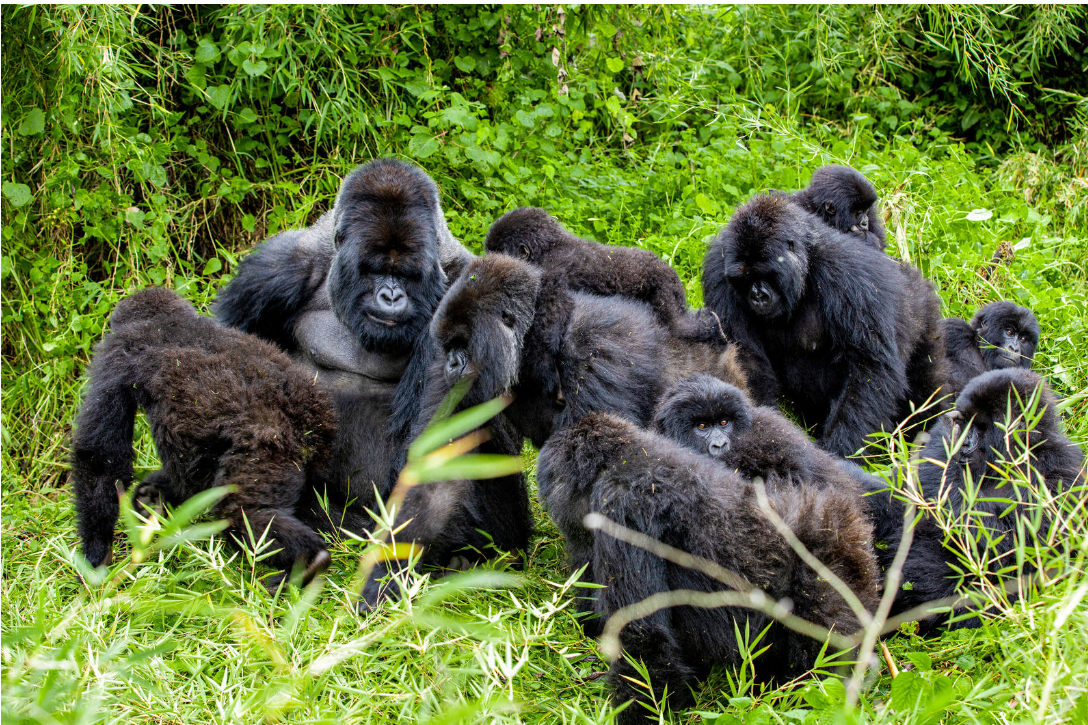
Perhaps the most famous reason people visit Bwindi is the opportunity to encounter mountain gorillas in their natural habitat.
Bwindi Impenetrable Forest is home to nearly half of the world’s remaining mountain gorilla population. These endangered primates live within family groups scattered throughout the forest.
Interestingly, the very characteristics that make Bwindi difficult for humans to navigate have helped protect the gorillas for centuries. The dense vegetation and rugged terrain provided a natural refuge where these remarkable animals could survive despite increasing pressures elsewhere.
Today, carefully managed gorilla trekking programs allow visitors to observe gorillas while ensuring minimal disturbance to their natural environment.
The forest’s impenetrable qualities have therefore played an important role in one of Africa’s greatest conservation success stories.
Extraordinary Biodiversity
Beyond gorillas, Bwindi is recognized as one of the most biologically diverse forests in Africa.
The forest supports hundreds of bird species, including many that are found nowhere else on Earth. It is also home to numerous mammals, reptiles, amphibians, and butterfly species.
Scientists continue to study the forest because of its ecological significance and unique biodiversity.
The dense vegetation creates countless microhabitats where species can thrive. From the forest floor to the canopy, every layer of Bwindi supports life.
This remarkable biodiversity is closely linked to the forest’s ancient history and relatively undisturbed nature.
Because large areas remained inaccessible for centuries, ecosystems were able to develop with limited human interference.
Modern Access Does Not Change Its Character
Although tourism infrastructure has improved significantly over the years, Bwindi remains true to its name.
The Uganda Wildlife Authority maintains trekking trails and access points that allow visitors to safely explore parts of the forest. However, much of the wilderness remains largely untouched.
Even experienced hikers are often surprised by the physical demands of gorilla trekking. Depending on the location of a gorilla family, visitors may spend several hours navigating steep slopes and dense vegetation before reaching their destination.
The effort required is often described as part of the adventure. Reaching a gorilla family deep within the forest creates a sense of accomplishment that makes the encounter even more memorable.
Visitors quickly realize that while access has improved, the forest remains one of Africa’s most authentic wilderness experiences.
The Conservation Importance of an Impenetrable Forest
The challenging nature of Bwindi has contributed significantly to its conservation value.
Many ecosystems around the world have been heavily altered by agriculture, logging, and urban development. Bwindi, however, retained much of its natural character because of the difficulties associated with accessing and exploiting the forest.
Its rugged terrain and dense vegetation discouraged large-scale human settlement and resource extraction in many areas.
As a result, the forest continues to provide critical habitat for endangered wildlife while serving as an important source of water and climate regulation for surrounding communities.
Today, conservation efforts focus on protecting this unique ecosystem for future generations.
Experience Bwindi With Frena Adventures
Visiting Bwindi Impenetrable Forest is far more than a wildlife excursion; it is an opportunity to step into one of the world’s most extraordinary natural environments.
At Frena Adventures, we help travelers experience the magic of Bwindi through expertly organized gorilla trekking safaris and tailor-made Uganda tours. Our experienced guides understand the forest’s history, ecology, and wildlife, ensuring that every visitor gains a deeper appreciation of this remarkable destination.
Whether you are planning your first gorilla trekking adventure or combining Bwindi with other iconic attractions across Uganda, Frena Adventures is committed to creating unforgettable safari experiences that showcase the very best of the Pearl of Africa.
Final Thoughts
Bwindi is referred to as an impenetrable forest because of its dense vegetation, ancient rainforest ecosystem, rugged terrain, and historically difficult accessibility. For centuries, these characteristics made the forest extremely challenging to navigate, earning it a reputation that continues to define it today.
Yet what once made the forest difficult to enter is now one of its greatest strengths. Its impenetrability has protected rare wildlife, preserved ancient ecosystems, and created one of the most rewarding adventure destinations in Africa.
For travelers seeking authentic encounters with nature, Bwindi Impenetrable Forest offers a journey into a world where wilderness still reigns. Every steep trail, tangled vine, and mist-covered hillside tells the story of a forest that has remained resilient through thousands of years, making it one of Uganda’s most treasured natural wonders.