
Kahungye Gorilla Family in Bwindi Impenetrable National Park: History, Leadership and Gorilla Trekking
The Kahungye Gorilla Family is one of the habituated mountain gorilla groups in the Rushaga sector of Bwindi Impenetrable National Park. Located in southwestern Uganda, Bwindi protects a significant population of endangered mountain gorillas and offers some of the most rewarding primate encounters in East Africa. The Kahungye group has an interesting history shaped by its large original population, the presence of several silverbacks and an important split that resulted in the formation of another habituated gorilla family.
For visitors planning a Uganda gorilla trekking safari, Kahungye offers an opportunity to observe mountain gorillas in their natural rainforest habitat. The family has passed through different stages of development since habituation began, making its history particularly interesting for wildlife enthusiasts and travellers who want to understand the social organisation of mountain gorillas.
Unlike a conventional wildlife safari, gorilla trekking involves walking through dense vegetation, following experienced trackers and observing a gorilla family at close range. The experience provides insight into the relationships between silverbacks, adult females, juveniles and infants while demonstrating the importance of conservation in protecting these remarkable primates.
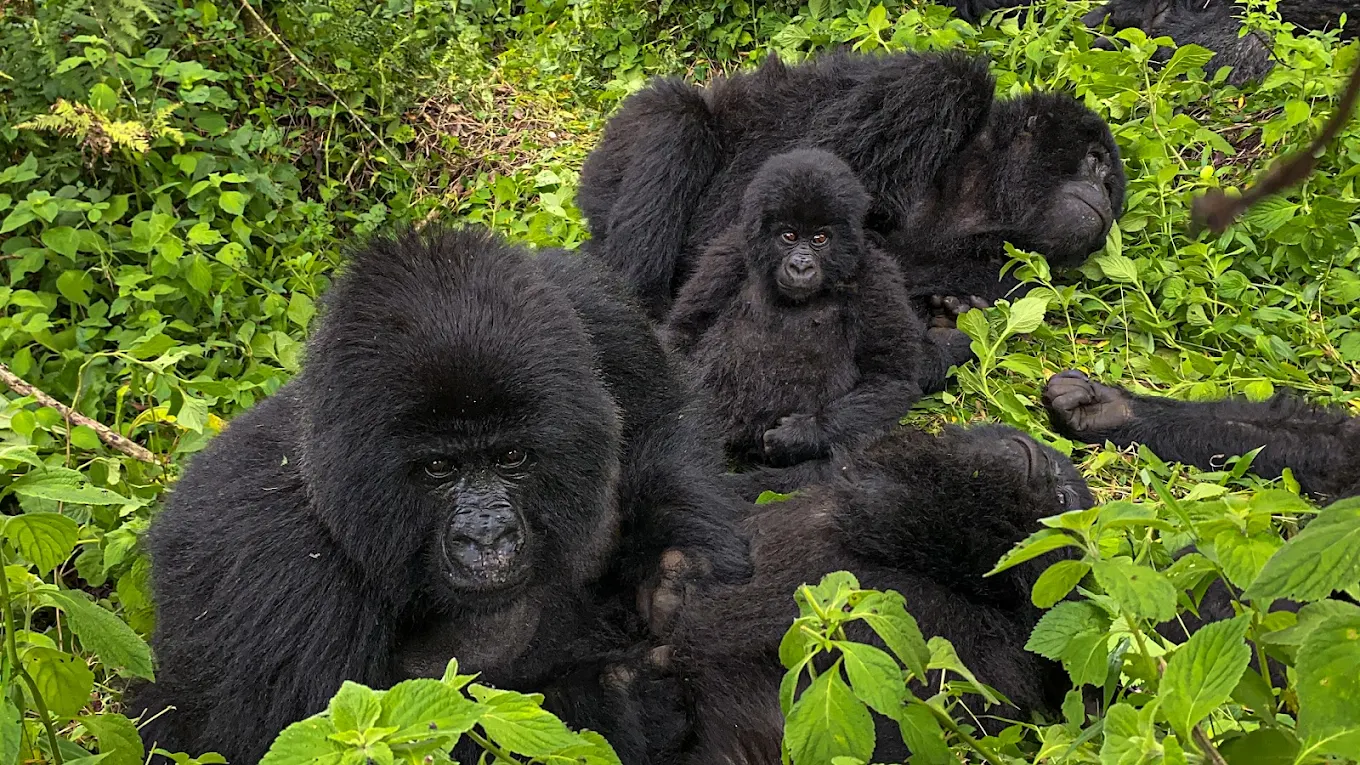
Kahungye Gorilla Family
History and Formation of the Kahungye Gorilla Family
The history of the Kahungye Gorilla Family dates back to 2008, when conservation authorities began habituating a large group of wild mountain gorillas in the Rushaga area of Bwindi Impenetrable National Park. At the time, the group consisted of approximately 29 individuals, making it one of the larger gorilla groups undergoing habituation in the region.
The habituation process introduced the gorillas gradually to the presence of human observers. Experienced trackers and researchers visited the group regularly, allowing the animals to become accustomed to people without changing their natural behaviour. This process requires patience and careful monitoring because mountain gorillas live in close-knit social groups and respond differently to unfamiliar encounters.
The original Kahungye group included three notable silverbacks: Riziika, Busingye and Rwiigi. Their presence contributed to the family’s distinctive social structure, as several mature males shared the group rather than one silverback exercising exclusive dominance.
The group’s name, Kahungye, comes from the local geographical area where the gorillas were initially encountered. Following habituation, the family became available for regulated gorilla trekking, giving visitors another opportunity to experience mountain gorillas in the Rushaga sector.
The 2012 Split and Formation of the Busingye Gorilla Family
One of the most significant events in the history of the Kahungye Gorilla Family occurred in March 2012, when the group experienced a major social division. The presence of several mature silverbacks created competition within the group, particularly over leadership and access to females. Such rivalries are part of the natural social dynamics of mountain gorillas, especially in groups containing more than one mature male.
During this period, Silverback Busingye separated from the original Kahungye group and took several members with him. This development resulted in the establishment of the Busingye Gorilla Family, which became a separate habituated group in the Rushaga sector. The new family took its name from the silverback that led the separation.
The split did not represent an unusual event in mountain gorilla society. Mature males sometimes leave their original groups to establish independent families, particularly when competition increases or opportunities for leadership become available. These changes contribute to the formation of new social groups and influence the distribution of gorillas throughout their forest habitat.
Today, Kahungye and Busingye remain recognised as separate gorilla trekking families. Their shared history makes them particularly interesting to visitors exploring the different habituated gorilla groups of Rushaga.
Leadership of the Kahungye Gorilla Family
Leadership plays an important role in the survival and organisation of a mountain gorilla family. The dominant silverback provides direction during daily movements, helps maintain group cohesion and protects family members when threats arise. He also influences the group’s interactions with neighbouring gorilla families and other mature males.
The original Kahungye group contained three silverbacks: Riziika, Busingye and Rwiigi. Their presence contributed to the group’s early social complexity and the competition that preceded its division. However, the history of the family did not end with the 2012 split. Like other habituated gorilla groups in Bwindi, Kahungye has continued to experience natural changes in membership and leadership.
According to the International Gorilla Conservation Programme’s family record, updated on 31 January 2024, Silverback Kasigazi leads the Kahungye Gorilla Family. This is an important historical reference when discussing the group’s leadership. Gorilla family structures can change over time, so visitors should rely on the latest information from park authorities when confirming the current dominant silverback.
The silverback’s responsibilities extend beyond physical protection. He helps maintain order, responds to disturbances and plays a central role in the group’s daily activities. His interactions with females, young gorillas and subordinate males provide visitors with fascinating opportunities to observe mountain gorilla social behaviour in the wild.
Current Composition of the Kahungye Gorilla Family
The Kahungye Gorilla Family has experienced changes in its population since habituation began in 2008. Births, natural deaths, movements between groups and changes in social relationships all influence the number of individuals living together.
The International Gorilla Conservation Programme recorded 15 members in its update of 31 January 2024. The published composition was:
This composition highlights the different age and social categories within the family. The four infants make the group particularly interesting for visitors hoping to observe young gorillas interacting with their mothers and other family members.
Blackbacks are sexually mature or maturing males that have not yet developed the fully silver-coloured saddle associated with mature silverbacks. As they grow older, some may eventually challenge for leadership, leave their natal groups or establish independent families.
Adult females play an equally important role in the group’s development. They care for their offspring, maintain social relationships and contribute to the continuation of the family through reproduction. Meanwhile, juveniles and infants provide an opportunity to observe the playful and nurturing side of mountain gorilla society.
Note: The figures above represent the dated IGCP record, not a guaranteed 2026 population count.
igcp.org
Where Is the Kahungye Gorilla Family Located?
The Kahungye Gorilla Family lives in the Rushaga sector of Bwindi Impenetrable National Park, in the southern part of the forest. Rushaga is one of Bwindi’s four main gorilla trekking sectors, alongside Buhoma, Ruhija and Nkuringo. The sector contains several habituated gorilla families and is an important destination for visitors interested in mountain gorilla encounters.
Rushaga’s landscape consists of steep forested slopes, deep valleys, thick vegetation and high-altitude rainforest. These conditions provide a suitable habitat for mountain gorillas, which depend on forest vegetation for food and shelter. The gorillas move through different parts of the forest in search of leaves, stems, shoots, fruits and other available vegetation.
The sector also offers access to several accommodation establishments, ranging from comfortable mid-range lodges to luxury forest retreats. Visitors can choose accommodation near the Rushaga trekking headquarters to reduce early-morning driving on the day of their gorilla trek.
For travellers planning a safari with Frena Adventures, Rushaga can be combined with other destinations in southwestern Uganda, including Lake Bunyonyi, Queen Elizabeth National Park and Mgahinga Gorilla National Park. This makes it possible to combine gorilla trekking with wildlife viewing, scenic landscapes and cultural experiences.
What to Expect When Trekking the Kahungye Gorilla Family
Trekking the Kahungye Gorilla Family begins early in the morning at the Rushaga sector headquarters. Visitors arrive for registration and a briefing conducted by Uganda Wildlife Authority rangers. During the briefing, the guides explain the trekking procedures, safety requirements and responsible behaviour around mountain gorillas.
After the briefing, visitors join their assigned ranger guides and begin walking into the forest. The duration of the trek depends on the gorillas’ location, their movements and the terrain. Some encounters require a relatively short walk, while others involve several hours of hiking through steep slopes and dense vegetation.
Once the trackers locate the family, visitors approach carefully under the guidance of the rangers. The encounter offers an opportunity to observe the gorillas feeding, resting, grooming and interacting with one another. You may see a silverback watching over the group, females caring for their infants or young gorillas playing among the vegetation.
The official gorilla viewing period lasts one hour. This restriction helps minimise disturbance and protects the gorillas from unnecessary human exposure. Visitors must follow their guides’ instructions throughout the encounter and maintain the required distance.
For many travellers, seeing a mountain gorilla family in its natural habitat becomes the highlight of their Uganda safari. The experience provides a rare opportunity to appreciate the intelligence, social relationships and gentle behaviour of these endangered primates.
Gorilla Trekking Rules and Conservation Guidelines
Mountain gorillas are vulnerable to human diseases, habitat disturbance and other environmental pressures. Uganda Wildlife Authority therefore regulates gorilla trekking to protect the animals and maintain responsible tourism practices.
Visitors trekking the Kahungye Gorilla Family must observe the following guidelines:
- Minimum age: Visitors must be at least 15 years old to participate in gorilla trekking.
- Group size: A maximum of eight visitors can visit a habituated gorilla family per day.
- Viewing time: Visitors can spend a maximum of one hour with the gorillas.
- Health precautions: Anyone with a cold, flu or another infectious illness should not visit the gorillas.
- Photography: Flash photography is prohibited.
- Food and drinks: Do not eat, drink or smoke when near the gorillas.
- Personal hygiene: Cover your mouth and turn away when coughing or sneezing.
- Distance: Maintain the prescribed minimum distance from the gorillas and follow the ranger’s instructions.
- Forest protection: Avoid littering, damaging vegetation or disturbing other wildlife.
These guidelines help protect mountain gorillas while allowing visitors to enjoy meaningful wildlife encounters. Gorilla tourism also supports conservation through permit revenue, employment opportunities and community development around Bwindi.
Best Time to Trek the Kahungye Gorilla Family
Gorilla trekking in the Kahungye family takes place throughout the year. However, weather conditions can influence trail accessibility and the overall trekking experience.
June to September is generally one of the most popular periods for gorilla trekking. These months fall within Uganda’s drier season, when forest trails are often easier to navigate. The period attracts many international visitors, so early permit reservations are advisable.
December to February also offers favourable trekking conditions. Rainfall is generally lower than during the main rainy seasons, making this another excellent period for exploring Bwindi.
March to May and October to November are generally wetter months. Forest trails can become muddy and slippery, and hiking may require additional effort. Nevertheless, the rainforest remains beautiful, and visitors can enjoy the lush vegetation and quieter travel periods.
There is no guarantee that a particular month will produce an easier trek because mountain gorillas move freely throughout their habitat. Their location on the day of tracking ultimately determines the walking distance.
What to Pack for Kahungye Gorilla Trekking
Proper preparation makes a significant difference when exploring the steep and sometimes muddy trails of Bwindi. Visitors should pack suitable clothing and essential trekking equipment to remain comfortable throughout the experience.
Recommended items include:
- Waterproof hiking boots with good ankle support.
- Long-sleeved shirts and long trousers.
- Lightweight waterproof jacket or raincoat.
- Gardening gloves for holding vegetation along forest trails.
- A small backpack for drinking water and personal belongings.
- Reusable water bottle.
- Camera with a suitable zoom lens.
- Insect repellent.
- Sunscreen and personal medication.
- Walking sticks, which can also be obtained at the trekking headquarters.
Hiring a local porter is another worthwhile option. Porters help carry backpacks, provide support on challenging sections of the trail and contribute directly to the livelihoods of communities surrounding Bwindi.
How to Book a Kahungye Gorilla Trekking Permit
Visitors interested in trekking mountain gorillas in the Kahungye family need a valid gorilla trekking permit issued by the Uganda Wildlife Authority (UWA). Permits are limited to protect habituated gorilla groups and regulate the number of visitors entering the forest each day.
One important detail is that UWA’s booking system uses designated trekking sectors as the entry points. Visitors book for Rushaga, and gorilla family allocation follows the park authorities’ arrangements on the trekking day. Therefore, travellers should confirm the family assignment with their tour operator rather than assume that a particular family is guaranteed.
Uganda Wildlife Authority
Frena Adventures helps travellers organise their gorilla trekking permits, accommodation, transport and guided safari arrangements. Booking in advance is recommended, particularly during the popular travel seasons.
Other Gorilla Families in the Rushaga Sector
Rushaga is home to several habituated mountain gorilla families, making it one of the most interesting areas for gorilla trekking in Uganda.
Visitors exploring this sector may also learn about:
- Busingye Gorilla Family: Established in March 2012 after Silverback Busingye separated from the original Kahungye group.
- Nshongi Gorilla Family: Historically one of Bwindi’s largest habituated groups.
- Bweza Gorilla Family: A habituated family that originated from the Nshongi group.
- Mishaya Gorilla Family: A group formed after a separation from Nshongi.
- Bikingi Gorilla Family: Known for its association with the gorilla habituation programme.
Each family has its own history, social structure and conservation story. Exploring these different groups provides a broader understanding of mountain gorilla behaviour and the importance of protecting their natural habitat.
Frequently Asked Questions About the Kahungye Gorilla Family
- Where is the Kahungye Gorilla Family found?
The Kahungye Gorilla Family lives in the Rushaga sector of Bwindi Impenetrable National Park in southwestern Uganda.
- How many gorillas are in the Kahungye family?
The International Gorilla Conservation Programme recorded 15 members as of 31 January 2024. The group included one silverback, four blackbacks, four adult females, one sub-adult female, one juvenile and four infants.
- Who leads the Kahungye Gorilla Family?
The IGCP record updated in January 2024 identifies Silverback Kasigazi as the group’s leader. Current leadership should be reconfirmed with park authorities because gorilla family structures can change.
- When did the Kahungye Gorilla Family start habituation?
Habituation began in 2008, when the group contained approximately 29 individuals.
- Why did the Kahungye Gorilla Family split?
In March 2012, Silverback Busingye led a separation from the original group, establishing the Busingye Gorilla Family. Competition and social dynamics among mature silverbacks contributed to the division.
- How long does Kahungye gorilla trekking take?
The trekking activity can take approximately 2–7 hours, depending on the location of the gorillas and forest conditions. Visitors spend a maximum of one hour observing the family once they find it.
- What is the minimum age for Kahungye gorilla trekking?
The minimum age for gorilla trekking in Uganda is 15 years.
- Can I combine Kahungye gorilla trekking with other safari destinations?
Yes. You can combine a Rushaga gorilla trek with Lake Bunyonyi, Queen Elizabeth National Park, Kibale Forest National Park or other destinations in southwestern Uganda.
Experience Mountain Gorilla Trekking with Frena Adventures
The Kahungye Gorilla Family represents an important part of Bwindi’s mountain gorilla conservation story. From its formation in 2008 and its original population of approximately 29 individuals to the historic separation that created the Busingye group, its history reflects the complex social relationships that shape mountain gorilla communities.
Today, the family remains one of the recognised habituated groups in the Rushaga sector. For visitors, trekking through Bwindi’s ancient rainforest and encountering these magnificent primates offers a memorable opportunity to experience Uganda’s extraordinary biodiversity.
At Frena Adventures, we organise personalised Uganda gorilla trekking safaris, helping travellers secure permits, select suitable accommodation and explore the country’s most remarkable wildlife destinations.
Whether you are planning a short gorilla trekking excursion from Kigali or a longer Uganda wildlife safari, our team can help you create an unforgettable journey.
Ready to experience mountain gorillas in Bwindi? Contact Frena Adventures to start planning your Kahungye gorilla trekking adventure.